Introduction
Website creation is changing faster than ever. AI can generate layouts and copy in minutes, no-code builders let non-developers launch polished sites, and modern architectures separate content from presentation so teams can move quicker. Together these shifts are making websites faster to build, easier to maintain, and more personalised for visitors—whether you are a solo founder or an enterprise team.

Step 1 — Use AI to speed up ideation and design
Start your project by letting AI help: generate moodboards, wireframes, headlines, or even full page templates from a short brief. AI tools can turn brand inputs (colours, tone, audience) into multiple layout options you can refine. Treat AI as a creative partner: it accelerates the first drafts so humans can focus on brand, nuance, and strategy.
Medium
How to apply it: Prompt an AI for 3 hero-section variants, pick one, then ask it to produce matching copy and image suggestions. Iterate quickly rather than starting from a blank page.

Step 2 — Pick the right no-code or low-code platform
No-code editors now power everything from simple landing pages to complex web apps. Platforms vary—some prioritise design freedom, others speed or e-commerce features—so pick the one that maps to your needs and scale plan. No-code lowers the barrier to entry and shortens launch time, letting marketing and product teams ship without waiting on devs.
Adalo
How to apply it: Match platform strengths to goals (e.g., Webflow/Framer for custom design, Wix/Squarespace for speed, Bubble for app logic). Prototype on a no-code tool, then decide if you need to migrate later.
Step 3 — Adopt modern architectures (headless, Jamstack, composable)
Separating content (CMS) from the front-end gives flexibility: designers can iterate freely, developers can optimise performance, and marketers can push content without code. Headless CMS + static or pre-rendered front ends (Jamstack) improve speed and security—key benefits as sites become more dynamic and personalised. This decoupled approach is becoming a go-to pattern for future-ready sites.
Jamstack.org
How to apply it: Start with a headless CMS for content and a lightweight front-end stack for delivery. Use APIs and CDNs so pages load fast globally.

Step 4 — Prioritise performance, personalised, and UX micro-interactions
Fast, tailored experiences win. Use AI for personalised content or product recommendations, compress assets for speed, and add subtle micro-animations to guide users (not distract). Mobile-first performance, accessible markup, and clear UX patterns should be baseline expectations in 2025—visitors notice lag and poor accessibility quickly.
DEV Community
How to apply it: Implement lazy-loading images, A/B test personalised CTAs, and audit accessibility with automated tools before launch.
Step 5 — Think about sustainability, security, and collaboration
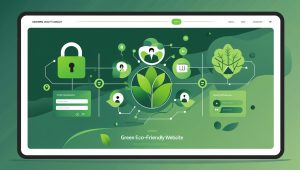
Future websites must be maintainable and ethical: choose eco-conscious hosting where possible, keep dependencies minimal for lower energy use, and bake security (authentication, backups, auth headers) into pipelines. Also design team workflows where AI assists but humans review—creative judgement, compliance, and brand voice still need people.
How to apply it: Automate CI/CD, run performance and security checks, and document AI prompts and editorial changes.
Conclusion
The future of website creation is a hybrid: AI and no-code tools accelerate the heavy lifting while modern architectures and human oversight ensure quality, performance, and brand fit. Adopt AI to prototype, choose a no-code platform that matches your roadmap, decouple content for flexibility, and keep performance and ethics front-and-center. When you combine these approaches thoughtfully, you’ll build websites that launch faster, adapt easier, and deliver better experiences—today and tomorrow.