How AI Is Transforming Businesses and Startups Worldwide
Introduction:
Artificial Intelligence (AI) is no longer a futuristic concept reserved for science fiction — it is a practical business tool reshaping industries and enabling startups to scale faster than ever. From automating repetitive tasks to unlocking deep customer insights, AI helps organisations reduce costs, improve products, and deliver personalised experiences. This blog breaks down, step by step, how businesses and startups worldwide are adopting AI and what practical actions you can take to stay competitive.
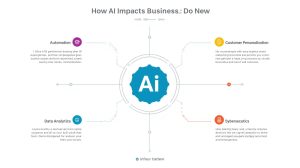
Step 1 — Automate routine operations
Begin by identifying repetitive, time-consuming tasks across your workflows: invoicing, data entry, customer ticket routing, and basic HR processes. Implement AI-powered robotic process automation (RPA) and intelligent document processing to free staff from manual work. The immediate benefits are faster turnaround, fewer human errors, and lower operational costs — resources that founders can reallocate to strategic growth.

Step 2 — Enhance customer experience with personalisation
AI enables hyper-personalised by analysing customer behaviour and predicting needs. Use recommendation engines, dynamic pricing algorithms, and AI-driven customer support (chatbots and virtual assistants) to create tailored user journeys. Startups can especially benefit by improving conversion rates and customer retention through personalised onboarding, targeted offers, and timely support.
Step 3 — Supercharge product development and innovation
AI accelerates product innovation by generating insights from large datasets and automating prototyping tasks. For software startups, generative AI can help produce code snippets, design assets, or content drafts. In hardware and biotech, AI-driven simulations and predictive models shorten R&D cycles. Adopt an experimentation mindset: run small pilots, measure impact, and iterate rapidly.

Step 4 — Make smarter decisions with data-driven analytics
Move from descriptive to predictive analytics. AI models can forecast demand, detect anomalies, and optimise supply chains. Embed dashboards and automated reporting so decision-makers receive actionable insights in real time. This shift helps businesses anticipate market shifts, allocate resources efficiently, and reduce risky guesswork.
Step 5 — Optimise marketing and sales
AI is changing how companies find and convert customers. Use machine learning to score leads, personalise marketing content, and optimise ad spend through real-time bidding strategies. Natural language processing (NLP) tools analyse customer feedback and social chatter, helping teams craft messages that resonate and respond faster to trends.

Step 6 — Improve hiring and internal productivity
Talent acquisition and retention benefit from AI-assisted recruiting tools that screen resumes, reduce unconscious bias, and predict candidate fit. Internally, AI can recommend personalised learning paths, automate routine HR tasks, and measure productivity trends — helping leaders build more engaged, skilled teams.
Step 7 — Reduce risk and strengthen security
AI-driven cybersecurity detects patterns and anomalies faster than manual monitoring. Fraud detection systems, behavioural analytics, and automated incident response tools enable startups to protect customer data and maintain trust — a non-negotiable asset in today’s market.

Step 8 — Address ethics, privacy, and compliance
As you adopt AI, proactively manage ethical and legal risks. Define transparent data governance policies, ensure compliance with applicable regulations, and monitor models for bias. Building ethical guardrails early prevents costly backlashes and builds customer trust.
Step 9 — Create an AI adoption roadmap
Map use cases to business value and technical feasibility. Start small with high-impact pilots, secure executive sponsorship, and invest in upskilling employees. Leverage cloud AI services or partner with specialists if you lack in-house expertise. Measure ROI and scale what works.

Conclusion:
AI is a strategic enabler — not a magic bullet. For businesses and startups, the most successful AI journeys focus on practical problems, measurable outcomes, and responsible deployment. By automating routine tasks, personalising customer experiences, improving decision-making, and keeping ethics front and center, organisations can unlock significant competitive advantage. Start with a clear roadmap, test rapidly, and build AI into your culture — that’s how you turn AI from hype into tangible growth.