Introduction
Google Ads in 2025 is smarter, faster, and more automated—but the goal has not changed: turn ad spend into profit. The winners are brands that feed Google clean data, pair automation with sharp strategy, and posses over landing-page experience. Here is a simple, step-by-step playbook to lift your ROAS (return on ad spend) and lower your CPA (cost per acquisition).
1) Define the outcome and the math
Pick one primary goal: sales, qualified leads, or new customers. Set a target CPA or ROAS based on margins and LTV (lifetime value). Example: if an average sale is ₹3,000 and margins are 40%, aim for ROAS ≥ 2.5 or CPA ≤ ₹1,200. Clear math prevents overspending.
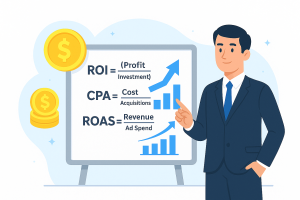
2) Fix tracking before spending ₹1
Install the Google tag, set primary conversions (purchases, form submits, calls), and assign values to each. Enable enhanced conversions and ensure consent compliance so your data remains accurate. If you are lead-gen, import offline conversions (e.g., from Customer relation mangement{CRM}) to teach Google which clicks become real customers.
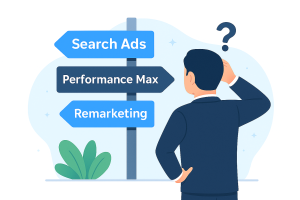
3) Choose campaign types that fit the goal
Search for high-intent queries (great for B2B and services).
Performance Max (PMax) for incremental reach across Search, YouTube, Discover, Maps, and Gmail—especially strong when you have good creatives and conversion tracking.
Add Remarketing only after Search/PMax are profitable to reclaim warm visitors.
4) Structure simply, not perfectly
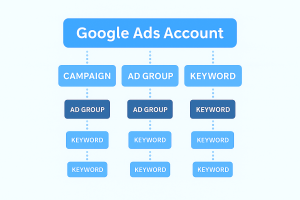
Create separate campaigns by goal or product line (e.g., “Emergency Plumbing” vs “Installations”). Keep tight ad groups so ads closely match queries. Use account-level negative keywords to block irrelevant traffic across the board (brand safety, job seekers, Did it yourself{DIY} searches).
5) Use bidding the right way
Start with Maximise Conversions or Maximise Conversion Value. Once you have enough data (20–40 conversions), move to Target CPA or Target ROAS. For e-commerce, turn on value-based bidding with accurate product margins. Use the New Customer Acquisition goal if you want to pay more for first-time buyers and less for existing ones.
6) Nail modern keyword strategy
Broad match works well with smart bidding—if you keep strong negatives. Pair broad with exact on must-win terms. Separate brand and non-brand so you can set different targets. Be careful with competitor keywords; watch CPA and quality.
7) Write ads that mirror intent
Use Responsive Search Ads with 8–12 concise headlines and 3–4 clear descriptions. Include:
The keyword (“Same-Day AC Repair”)
A value prop (24/7 service, free diagnosis, warranty)
A specific Call to action{CTA} (Book Now, Get Quote, Call Today)
Add assets: sitelinks, callouts, structured snippets, prices, images. These raise CTR and quality while lowering Centralised procesing centre{CPC}.

8) Feed PMax with strong signals
For PMax, group products or services into focused asset groups. Provide audience signals (Customer Match lists, in-market interests), high-quality images/videos, and clean product feeds if you sell online. Monitor search term insights and exclude irrelevant categories via negatives where available.
9) Make the landing page do the heavy lifting
You do not earn return on investment {ROI} on the ad—you earn it on the page. Keep it fast, mobile-first, and focused:
Headline matches the query
One primary Call to action above the fold
Short form (ask only what you need)
Trust signals: reviews, guarantees, certifications
Proof: case studies, logos, social validation
A 20–30% lift in conversion rate often cuts CPA in half.

10) Optimise weekly in short loops
Search terms: add negatives; mine new winners.
Assets: keep top performers, refresh weak ones.
Locations/hours/devices: shift budget to what converts.
Budgets: move money from high Cost per aquisition {CPA} to low CPA campaigns.
Experiments: test bidding targets, pages, and creatives—one big lever at a time.
11) Scale without breaking efficiency
Increase budgets gradually (10–20% at a time). Expand to new languages, launch additional PMax asset groups, and broaden keyword themes once your negatives are solid. For e-commerce, improve feed quality (titles, images, attributes). For B2B, add lead forms and call ads during peak hours.

12) Report like a CFO
Track mix ROAS (all channels), incrementality (new vs existing customers), and Life time value{LTV}. Tag every campaign with universal testing machines{UTMs}. Share a simple weekly view: spend, conversions, CPA/ROAS, top queries, best and worst pages, and the one change you’ll make next.
Conclusion
In 2025, the highest ROI comes from pairing Google’s automation with your business intelligence. Give the algorithm clean conversion data, protect your budget with negatives and tight structure, craft intent-matching ads, and obsess over landing-page speed and clarity. Optimise weekly, scale carefully, and measure like a CFO. Do that, and Google Ads would not just drive clicks—it’ll drive profitable, compounding growth.