The Business World 2.0: How AI is Shaping the Next Era
Introduction
We are entering Business World 2.0, where artificial intelligence (AI) is no longer just a supporting tool but a core driver of strategy, operations, and growth. From streamlining processes to unlocking customer insights and driving innovation, AI is reshaping the way companies compete and collaborate. Businesses that adapt early are not only surviving but thriving, while those ignoring AI risk being left behind. In this blog, we’ll explore step by step how AI is shaping the next era of business and what it means for entrepreneurs, startups, and established enterprises alike.

Step 1 — Automating Everyday Processes
AI enables businesses to eliminate repetitive, low-value tasks through robotic process automation (RPA) and intelligent systems. Tasks like data entry, invoicing, payroll, and scheduling are being automated, reducing human error and freeing employees to focus on more strategic work. This shift boosts efficiency and lowers operational costs.

Step 2 — Enhancing Customer Experience
Modern customers expect personalised, instant, and seamless experiences. AI tools such as chatbots, virtual assistants, and recommendation engines help businesses tailor interactions in real time. From personalised shopping suggestions to AI-powered customer support, companies can build stronger relationships and improve satisfaction rates.
Step 3 — Driving Smarter Decision-Making
Data has become the new currency of business, but raw data is useless without analysis. AI enables companies to move from descriptive reports to predictive and prescriptive analytics. This means businesses can forecast demand, optimise supply chains, detect fraud, and even anticipate customer needs, ensuring smarter, faster, and more confident decisions.
Step 4 — Fueling Innovation and Product Development
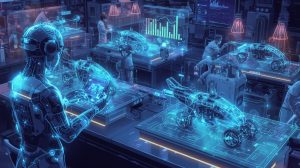
AI accelerates innovation cycles. For software firms, generative AI can create prototypes, code snippets, and even marketing content. For industries like biotech and manufacturing, AI-powered simulations speed up research and development. This allows businesses to innovate more rapidly and bring products to market faster than ever before.
Step 5 — Revolutionising Marketing and Sales
AI is transforming how companies connect with customers. Machine learning helps score leads, personalise campaigns, and optimise ad spend in real time. Natural language processing (NLP) tools analyse customer sentiment, providing marketers with insights into what resonates. Sales teams, in turn, benefit from AI-powered recommendations that identify the best opportunities and messaging strategies.

Step 6 — Transforming Workforce and HR
AI is reshaping how businesses attract and manage talent. Intelligent hiring tools help screen resumes, reduce bias, and predict candidate success. Internally, AI recommends personalised learning and career paths for employees, helping businesses build a skilled and motivated workforce ready for the AI era.
Step 7 — Strengthening Risk Management and Security
As businesses become more digital, the risk of cyber-attacks and fraud grows. AI enhances security by detecting anomalies, identifying threats, and triggering automated responses. In finance, AI systems spot suspicious transactions, while in IT, AI-driven cyber-security tools ensure proactive protection of sensitive data and assets.

Step 8 — Addressing Ethics and Responsibility
AI brings opportunities, but also ethical concerns. Businesses must address issues like data privacy, algorithmic bias, and compliance with regulations. Transparent governance, fairness in decision-making, and accountability are essential to maintaining customer trust in this new AI-powered era.
Step 9 — Building a Road-map for AI Integration
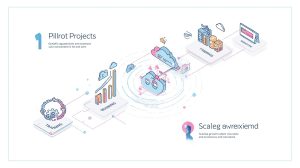
To succeed in Business World 2.0, companies need a structured AI adoption plan. Start small with pilot projects, measure results, and scale gradually. Partner with AI experts, leverage cloud-based tools, and train employees to adapt. A clear road-map ensures sustainable transformation rather than rushed implementation.
Conclusion
AI is not just another technology trend—it is the foundation of Business World 2.0. By automating processes, personalising customer experiences, improving decision-making, and driving innovation, AI is rewriting the rules of competition. However, success requires balance: embracing efficiency while addressing ethics, investing in innovation while building trust. The next era of business belongs to those who view AI not as a threat but as a strategic partner. Companies that adapt now will define the future—those that don’t risk being left behind.