AI-Powered Productivity: How Companies Save Time and Money
Introduction
Productivity is the bridge between strategy and results—and artificial intelligence (AI) is building that bridge faster than ever. From automating repetitive tasks to optimising workflows, AI helps companies reduce costs, free up talent for higher-value work, and speed up decision-making. Beyond efficiency, AI can reveal hidden bottlenecks and suggest better resource allocations, turning small operational changes into measurable savings. This step-by-step guide explains practical ways businesses can use AI to boost productivity, with concrete actions you can start implementing today.

Step 1 — Identify high-impact, repetitive tasks
Begin by mapping processes that consume lots of time but add limited strategic value: invoicing, data entry, report generation, and scheduling. Prioritise use cases with clear outcomes and measurable time savings.
Action: Run a one-week time audit to quantify hours spent on routine tasks and pick the top 2–3 to automate first.

Step 2 — Automate with intelligent tools
Deploy robotic process automation (RPA) and AI-driven document processing to handle rule-based workflows and unstructured data. These tools reduce manual errors and accelerate throughput. Over time, combine RPA with small AI models to handle exceptions and progressively reduce human intervention.
Action: Start a small pilot—automate a single invoice or report process, measure time saved, and iterate.
Step 3 — Streamline communication and collaboration
Use AI to summarise meetings, prioritise emails, and suggest action items. Smarter internal search and knowledge assistants cut the time people spend hunting for information.
Action: Trial an AI note-taker and a contextual search tool for one team and collect feedback after two weeks.

Step 4 — Accelerate decision-making with predictive analytics
Replace guesswork with forecasts. Forecasting models for demand, capacity, and churn empower teams to make proactive, faster choices that save money and reduce waste. Even simple predictive scores can prevent stock-outs or over-ordering that erode margins.
Action: Implement one predictive model (e.g., demand forecast for a top product) and compare decisions made with and without the model.
Step 5 — Optimise operational workflows
AI can optimise routing, inventory levels, and scheduling—cutting idle time and lowering operational costs. Small percentage gains in routing efficiency or inventory turnover compound into significant annual savings and better customer service.
Action: Run an optimisation pilot on delivery routes or shift scheduling and measure fuel, time, or overtime savings.

Step 6 — Enhance employee productivity and learning
AI-driven platforms recommend personalised training, detect skill gaps, and suggest task re-distributions. When employees up-skill faster, productivity rises and hiring costs fall. These systems also help managers allocate work more fairly and efficiently.
Action: Launch a personalised learning module for high-impact roles and track improvements in performance metrics.
Step 7 — Improve customer service efficiency
Chat–bots and virtual assistants handle routine inquiries 24/7, freeing human agents for complex cases. Faster responses boost satisfaction and lower support costs, while conversational AI captures data that informs product and process improvements.
Action: Deploy a FAQ chat-bot for common customer queries and monitor deflection rates and customer satisfaction scores.

Step 8 — Monitor, measure, and iterate
Productivity gains only last if you measure them. Track time saved, error reduction, cost per task, and employee satisfaction. Monitor models for drift and re-calibrate when needed, and treat metrics as inputs for continuous process improvement.
Action: Create a monthly productivity dashboard combining operational KPIs and AI model health metrics.
Step 9 — Scale thoughtfully and govern responsibly
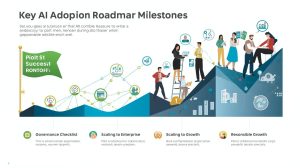
Once pilots demonstrate ROI, standardise successful tools, document playbooks, and scale across teams. Maintain governance—data privacy, model ex-plainability, and fairness—to prevent costly mistakes. Embed change management so employees understand benefits and know how to work with AI.
Action: Build an AI playbook and an approval checklist before broad rollouts.
Conclusion
AI-powered productivity is a multiplier: it reduces routine work, tightens operations, and creates space for strategic thinking. The biggest wins come from starting small, measuring impact, and scaling responsibly while keeping people at the center. Begin with clear metrics, run focused pilots, and make governance part of every launch. Do that, and your company would not just save time and money—it will be better positioned to innovate and compete in the long run.